
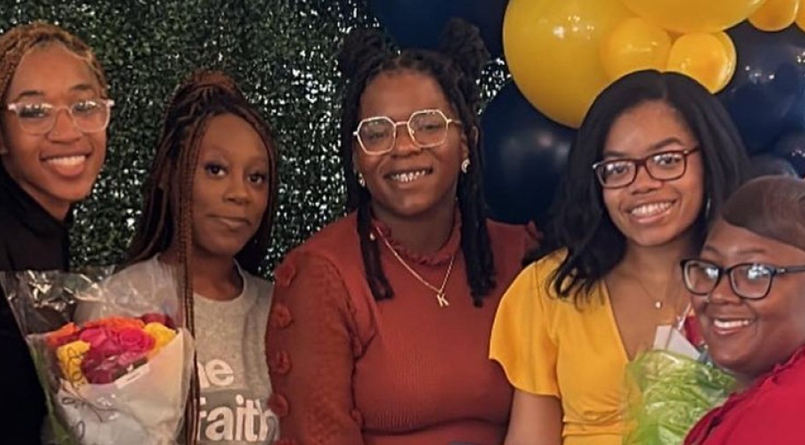
First-Generation College Students Get Support At JCSU
Kenyatta Reed, program and tutorial coordinator in Student Support Services at Johnson C. Smith University, knows first-hand the challenges and opportunities first-generation college students face.
“I went to Kent State University, which is in Northeast Ohio,” she said. “I was the first of my immediate family to go college. I always knew I wanted to go to school, but I wasn’t sure how to navigate the processes, like how to apply and pay for my education.”
Today, Reed and her colleagues in TRiO Student Support Services work to assist and celebrate other first-generation college students as they embark on their journeys through higher education and work to secure profitable careers doing what they love.
Laquavion Taylor ’26 said his motivation to come to school came from a desire to break generational struggles to improve his financial outcome.
He says TRiO has been immensely helpful during his time at JCSU.
“With TRiO, I’ve gotten help with writing papers and received tutoring for math,” he said. “I’ve also gotten assistance for my financial needs. I have gotten overall support both in and out of the classroom.”
Taylor is a Biology major and admits he knew very little about higher education until his cousin, a senior at JCSU, introduced him to the University.
Reed says her team works together to provide tutorial services for students, offer experiential learning opportunities and give them insight into the connections and resources available to them.
TRiO Student Support Services is available for students who are Pell Grant eligible, first-generation college students or have disabilities.
Bre’Asia Demery ’24 had the unique experience of being a first-generation college student while struggling through a chronic illness.
Demery, a Psychology major, has sickle cell anemia, a disorder which causes deformities in red blood cells. Because red blood cells carry oxygen throughout the body, it can lead to symptoms such as dizziness and fatigue. Lack of proper blood flow can cause chronic pain and swelling.
“I was fortunate enough to attend a Charter School, so my challenges have been more physical and mental,” she said. “With sickle cell, you never know how or when you’re going to get sick. Sometimes, I have to be on a Zoom call with an oxygen tube.”
Demery explained that TRiO has been a huge help in securing her accommodations so that her sickness doesn’t impede her education.
“When you see a student succeed, it feels refreshing,” said Reed. “It is amazing to see our students being featured in different articles, attaining an internship and becoming leaders on campus. Seeing them accomplish the goals they’ve set for themselves means we’re doing our job to provide support to them.”
The need for TRiO Student Support Services is immense, according to Reed.
According to Forbes, nearly 60 percent of Black or African-American college students are the first in their families to pursue higher education. Additionally, students whose parents did not attend college are more likely to come from low-earning households.
While both Predominately White Institutions (PWIs) and HBCUs or Minority Serving Intuitions (MSIs) all serve large populations of first-generation college students, HBCUs and MSIs don’t always have the funding to secure the resources students need.
“When I look at the resources I had at Kent State, the support team had a lot of staff, but here our capacity is more limited,” she said. “We have to think of creative ways to provide the same services even if we don’t have the staff to do it.”
In order to offer more services, Reed says TRiO Student Support Services will pilot a first-generation leadership program, which will allow first-gen students to connect with faculty and staff who were also the first in their families to attend college.
“We talk about retention a lot in higher education,” said Reed. “One thing I’m noticing is the relationships we have with our students are important. When they feel connected, they want to stick around.”